35 Killed in Southern Philippines After Major Earthquake Causes Widespread Damage
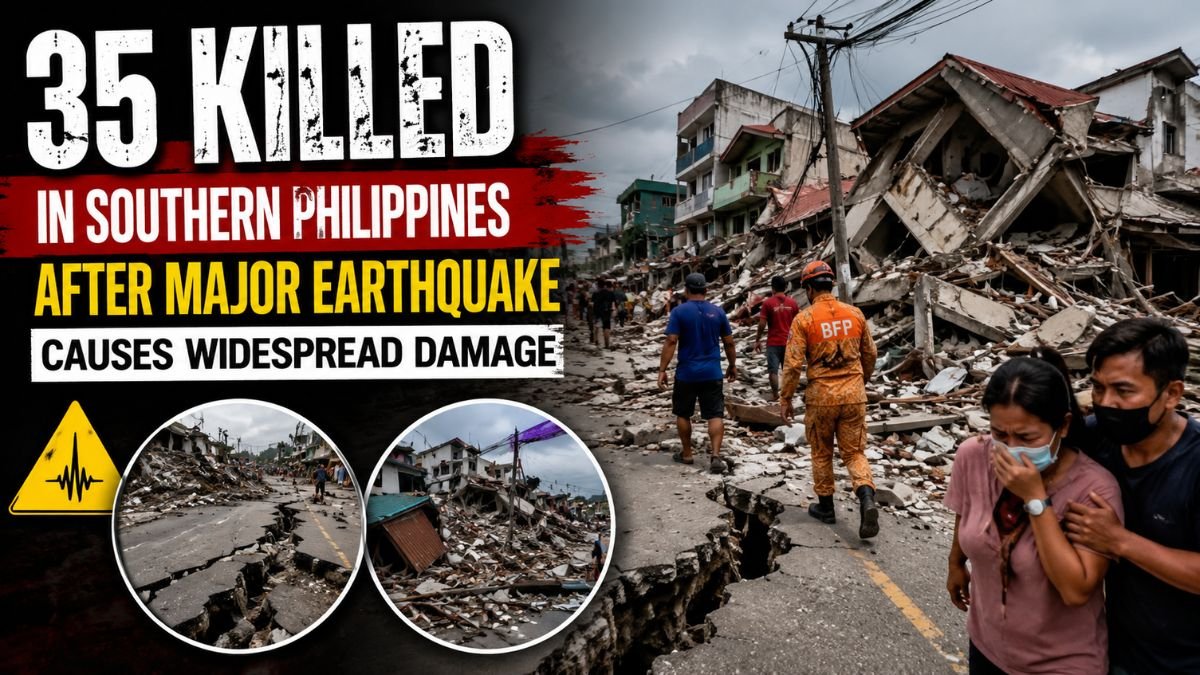
A powerful earthquake shook the entire region of the southern Philippines. So far, reports indicate 35 deaths and numerous injuries following this natural disaster. The intense tremors created an atmosphere of fear and panic across several areas. Locals reported that the sudden, violent shaking of the ground drove people out of their homes and buildings. This event has emerged as a major disaster for the Philippines, disrupting daily life across multiple regions.
Extensive Damage Caused by the Earthquake
The earthquake's intensity was severe enough to damage numerous buildings, roads, and public spaces. Walls collapsed in many locations, and some structures were structurally compromised. The administration has launched relief and rescue operations in the affected areas. According to officials, the exact extent of the damage is still being assessed, as information from remote areas is taking time to arrive.
Panic Among the Public and Difficult Conditions
Widespread fear has gripped thousands of people following the earthquake. Many families fled their homes in search of safety. The fact that the tremors struck at night heightened anxiety, as many were afraid to return indoors. Local communities were forced to stay in open areas, while rescue teams worked tirelessly to assist those in need.
Ongoing Relief and Rescue Operations
Rescue teams have been deployed to the earthquake-affected regions. Officials are working to extract people trapped in the rubble and transport the injured to hospitals. Medical teams have been placed on high alert to ensure immediate treatment for those requiring it. The government has pledged assistance to affected families, and the distribution of relief supplies has already begun.
Impact on Roads and Communication Networks
Roads in several areas were damaged by the earthquake, posing challenges for relief operations. Power and communication services were also disrupted in some regions. Consequently, rescue teams are facing difficulties in reaching the affected areas. The administration is continuously making efforts to normalize the situation so that people can access essential services as soon as possible.
Why is the risk of earthquakes high in the Philippines?
The Philippines is among the countries most prone to earthquakes and volcanic activity. The region is situated near the "Ring of Fire," a seismic zone characterized by frequent tectonic plate movement. Consequently, residents frequently face natural disasters.
Response by the government and local administration
Following the earthquake, the Philippine government and local administration initiated immediate action. The disaster management department has stepped up monitoring in the affected areas. Officials have urged the public to remain vigilant and avoid heeding rumors. Relief camps are being set up to provide safe shelter for those whose homes have been damaged.
Possibility of a rising death toll
Rescue operations are still underway in several areas; therefore, the figures regarding casualties and injuries may change. Information from remote areas often arrives late following major earthquakes. The primary objective of relief teams is to save lives and deliver aid to affected families.
Resilience and cooperation among locals
In this difficult time, local residents set an example of humanity by helping one another. Many assisted their neighbors in reaching safe locations and supported relief efforts. Community cooperation during a disaster plays a crucial role in managing the situation.
The need for future preparedness
This earthquake in the southern Philippines has once again highlighted the importance of being prepared for natural disasters. Sturdy infrastructure, improved disaster management, and public awareness can help minimize damage during such events. Currently, the primary focus is on relief and reconstruction to enable the affected regions to return to normalcy quickly.
Conclusion
The major earthquake that struck the southern Philippines has proven to be a severe natural disaster, claiming 35 lives and causing extensive damage. The administration and rescue teams are continuously working to improve the situation. This incident serves as a reminder that preparedness and cooperation are the greatest strengths in the face of natural disasters.