Jantar Mantar Protest: Wangchuk to End Fast if Parliament Prioritizes Education Accountability
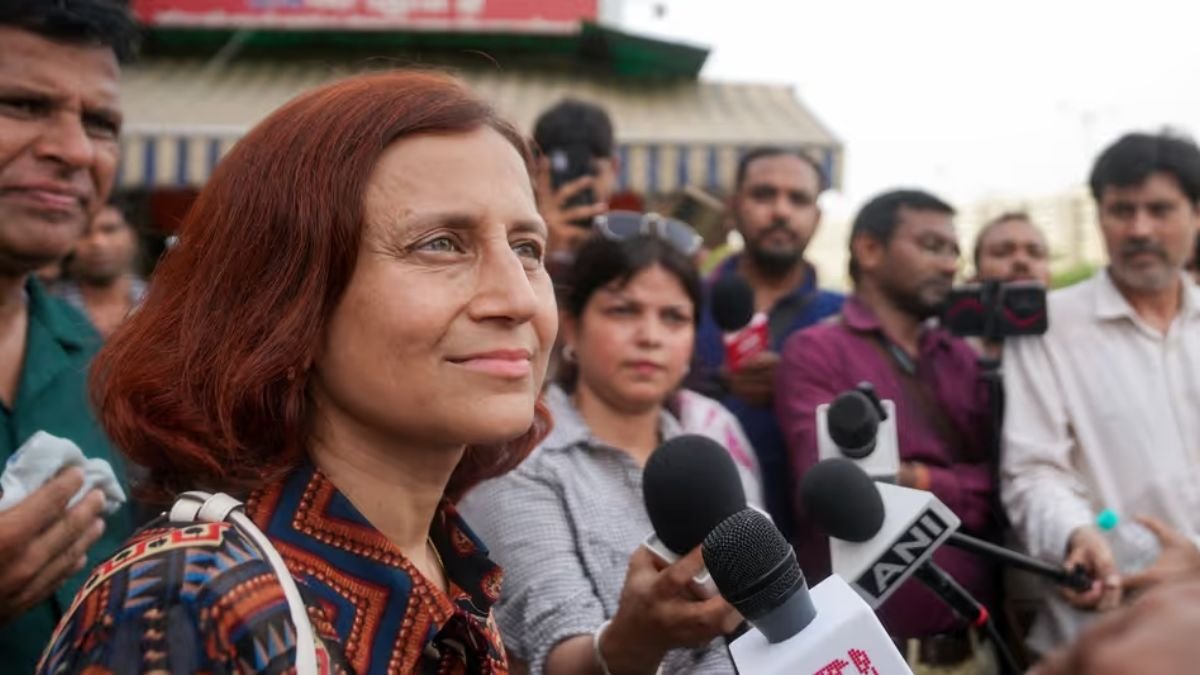
The ongoing protest at Delhi's Jantar Mantar has once again become a subject of national discussion. At the heart of this movement lie critical issues concerning education reform, accountability, and policy formulation. During the protest, it emerged that social activist and education reform advocate Sonam Wangchuk might consider ending his hunger strike if a serious and meaningful discussion regarding accountability in education takes place during the upcoming parliamentary session. A statement by Gitanjali Angmo in this regard has also drawn significant attention. She asserts that the movement's objective is not confrontation, but rather ensuring transparency, accountability, and effective reform within the education system. .
Why is the movement at Jantar Mantar making headlines?
Delhi's Jantar Mantar has long been a prominent hub for democratic protests, hosting movements centered on various social and national issues over the years. The current protest is in the spotlight due to demands for accountability and questions regarding education. Protesters argue that transparency, quality, and effective oversight within the education system Protesters emphasize the need to prioritize transparency, quality, and effective oversight within the education system.. They believe that genuine reform in the education sector is possible only when accountability is established in both policy formulation and implementation.
What is the objective of Wangchuk's hunger strike?
A hunger strike is considered a vital form of peaceful protest in any democratic society. This movement seeks to raise education-related issues at the national level. Its primary goal is to ensure that education policy does not remain confined to paper but yields a tangible impact on students, teachers, and institutions. Supporters maintain that education should Supporters argue that education should extend beyond examinations and marks, serving instead as a solid foundation for shaping the future. merely to examinations and marks; rather, it must serve as a robust foundation for shaping the future.
What is the significance of Gitanjali Angmo's statement?
Gitanjali Angmo stated that Wangchuk might end his fast if the issue of educational accountability is seriously raised and substantively discussed during the upcoming parliamentary session. This statement is considered significant in the context of the movement, as it indicates that the protesters' aim is not merely to register a protest but to establish a meaningful dialogue with the government and Parliament. It also clarifies that the movement's focal point is moving towards a solution.
Why is the issue of educational accountability so important?
Education plays a pivotal role in the development of any country. If accountability is not ensured within the education system, the intended benefits of schemes and policies will fail to reach the students. Experts believe that accountability entails not just fixing responsibility on government officials, but also ensuring the collective responsibility of educational institutions, the administration, and policymakers. This can lead to improvements in the quality of education, better utilization of resources, and enhanced student learning outcomes.
Why is the role of Parliament considered crucial?
In a democratic system, Parliament is the platform where issues of national importance are discussed and the direction of policies is determined. A serious debate in Parliament on educational accountability could increase the likelihood of building a broad consensus on related suggestions, reforms, and future plans. This is why those associated with the movement attach great importance to parliamentary proceedings. They believe that if Parliament prioritizes this subject, positive steps towards educational reform can be taken.
What impact is the movement having on society?
This protest has sparked a fresh conversation about education among the general public. Debates regarding the education system, accountability, and reforms have intensified across social media and various public forums. Many educationists, students, and social organizations have also voiced their views on the quality and transparency of education. This makes it clear that the issue is not confined to the movement alone but is influencing various sections of society.
Which aspects need attention for educational reform?
According to experts, educational reform cannot be achieved merely by formulating new policies. It also requires focusing on teacher training, the use of modern technology, equal opportunities in rural and urban areas, infrastructure development, a transparent evaluation system, and the effective utilization of resources. Furthermore, a robust system of regular review and accountability within educational institutions is considered essential. If these aspects are addressed seriously, the country's education system can be made more effective.
Why is dialogue between the government and the protest movement necessary?
In a democracy, the most effective resolution to any dispute or demand is found through dialogue. If the government and representatives of the movement engage in constructive conversation, solutions to many complex issues can be easily identified. The participation of all stakeholders is crucial when dealing with a sensitive subject like education. Experts believe that policies serving the best interests of students, teachers, and society can only be formulated through cooperation and dialogue.
What message does this movement hold for the youth and students?
This movement conveys to the youth that, within a democratic system, it is crucial to voice one's views in a peaceful and constitutional manner. Education is not merely a means for individual success but also the cornerstone of societal and national development. Therefore, students should not limit themselves solely to their studies; they should also understand issues related to improving the education system. Adopting this mindset—moving towards becoming informed citizens—could prove beneficial for the future.
What might happen next, and why are all eyes fixed on the situation?
All eyes are now fixed on the upcoming session of Parliament and the discussions that will take place there. If the issue of educational accountability is raised seriously and concrete initiatives are observed in this regard, the movement could witness a significant shift. On the other hand, if the protests continue, the national debate on education reform is likely to intensify.
It is evident that this movement has evolved beyond a mere hunger strike; it has become a symbol of a broader dialogue demanding reform, transparency, and accountability within the education system. In the coming days, the roles played by Parliament, the government, and the stakeholders involved in the movement will determine the course of these events. If all parties move forward with a constructive mindset, this initiative could prove to be a significant step towards making the country's education system more robust, accountable, and future-ready.
Related News